
http://www.ncbi.nlm.nih.gov/pmc/articles/PMC3022995/
One of the most common issues that is currently being talked about is that of running cadence… to ease the overstriding that many atheletes are guilty of. Excessive braking forces when the foot strikes the ground too far ahead of the centre of mass.
Increasing stride cadence, or step frequency can result in the foot striking closer to under the hips and therefore the centre of mass. This can reduce impact, braking forces and injury. This is nothing new in the world of running, with most advice being that 180 Strides per minute being ideal…. however new research by Heiderscheit et al (2011) indictaes that running at 5-10 % higher rate of cadence results in a reduction in impact, and bounce, and creates a reduced braking force on ground reaction. With many people running in the 164 SPM increasing the strides by 10% brings them up nearer the 180 old ideal SPM. However as a recreational runner I doubt, like many mine would ever get up there!
The most important thing to start with is to find out the stride cadence that the patient is currently doing- there are many different ways- some fancy… some easy to do this. There are gadgets- such as Garmin Foot pod, pediometer or cheaper just count the steps over a given time and multiple. You need to make sure they are running at a pace that they feel comfortable before starting the counting process, and that the running pace feels normal to them.
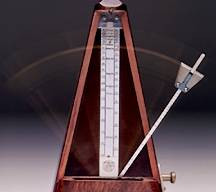
So how do you correct the cadence and increase it? a metrome can work… iphone have lots of apps for this ( many are free), the best and most interesting is to run with the beat of the music and there are a few websites telling you what tracks have what beat, and better still whole albums you can download that are at a set number of beats per minute. Makes for a more interesting run and can be more motivating than just a metrome beat.
The idea would be to increase by 10% and not jump straight into the old ideal that 180 is what they should be achieving. Going up by 5% at a time may be more comfortable.
Just watch as the cadency increases as the fatigue will increase and the form will drop, good pace is only useful if the form is maintained.
So start counting and remember this is…. cadence is just one aspect of improving running… 180 is not the magic number…. only in Darts!
John Willson (East Carolina University, USA) investigated the effects of increasing step rate and foot strike on 20 recreational runners (10 M and 10 F) on PFJ stress. Results indicated that a 10% reduction in step length (i.e. increase in step rate) was able to reduce PFJ stress per step and per mile (i.e. accumulative) by 18 and 15% respectively. Additionally, forefoot strike running reduced PFJ stress per step and per mile (i.e. accumulative) by 22 and 21% respectively. The combination of increased step rate and forefoot strike running provided the lowest PFJ stress.
Interpretation: Simple manipulation of strike pattern and step rate is likely to lead to symptom reduction in PFP as a result of reduced PFJ stress. Importantly, these reductions were not just per step, but also accumulative. This negates a common argument that increased step may result in less per stride load, but greater accumulative load. Caution is still needed when changing strike patterns as other studies have shown increased load at the foot and ankle – so be aware. Increasing step rate may be the safer of the two options.
 physioandrehab